| 大阪城 |
|
=ポイント= 広過ぎるので、何回も訪問しなければ、上辺だけになってしまう。 Google マップ |
| <2025(R7)年3月23日> |
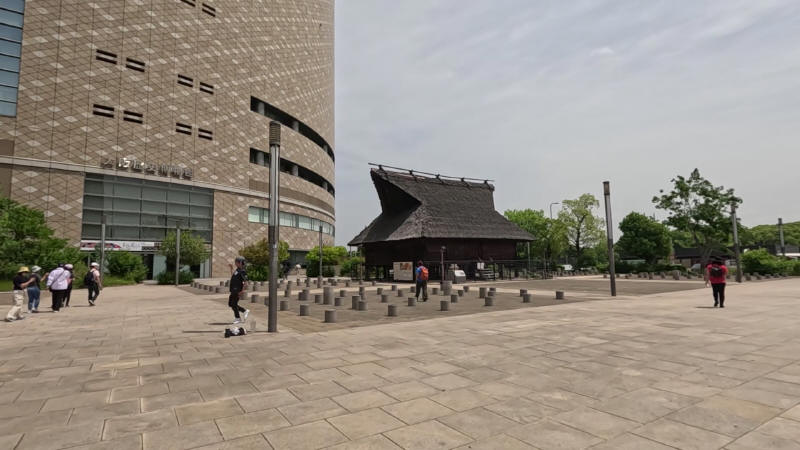
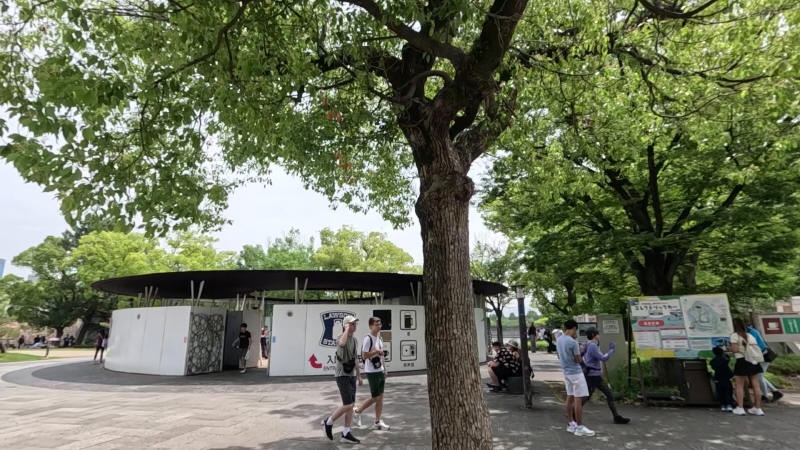
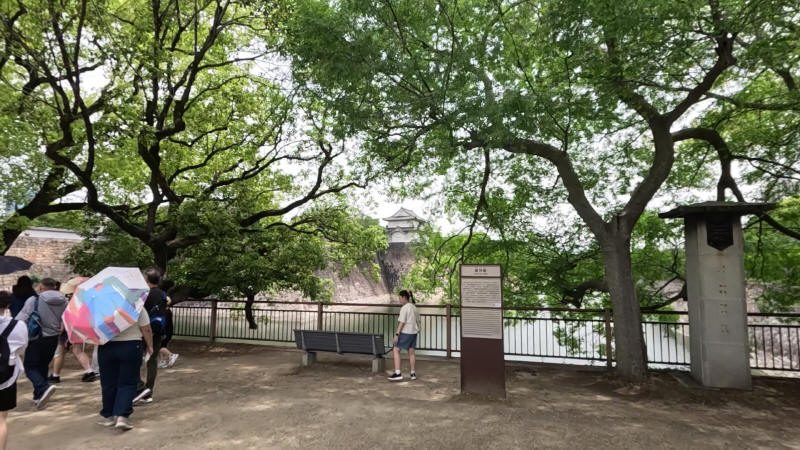
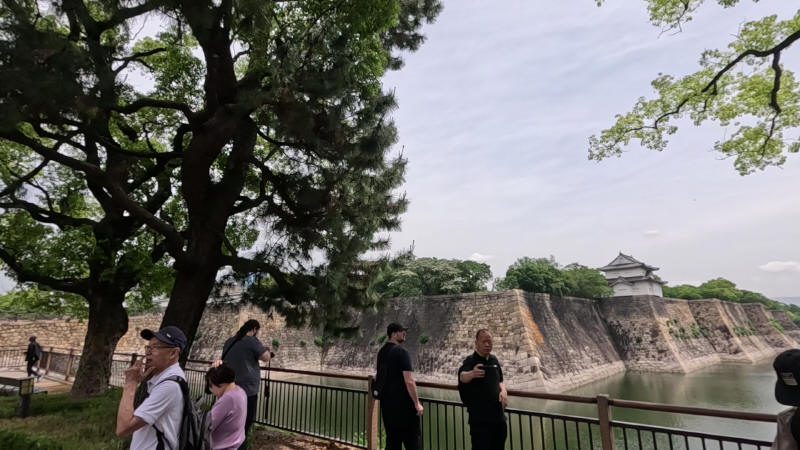
| 地下鉄谷町四丁目駅から難波宮公園に入ると、大阪歴史博物館がありその前に法円坂遺跡の茅葺の建物が見えた。本町通と上町筋が交わる交差点を渡り、エレクトリックカーの馬場町駅から入ると、目の前に円いローソン S大手前レストハウス店がある。この辺りは大手前の馬場跡のようだ。南外堀沿いには解説板とラジオ塔がある。南外堀沿いからは木立越しに六番櫓が見えてくる。 |
 |
 |
 |
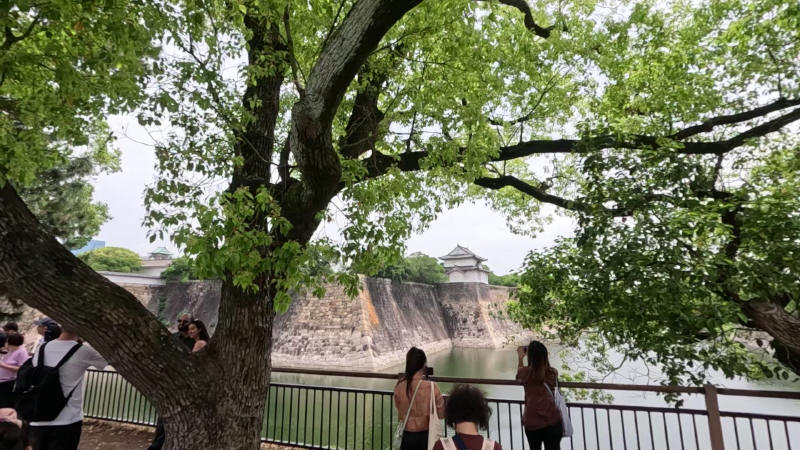 |
| 大阪歴史博物館 | 円いローソン | 解説板とラジオ塔 | 南外堀と六番櫓 |
|
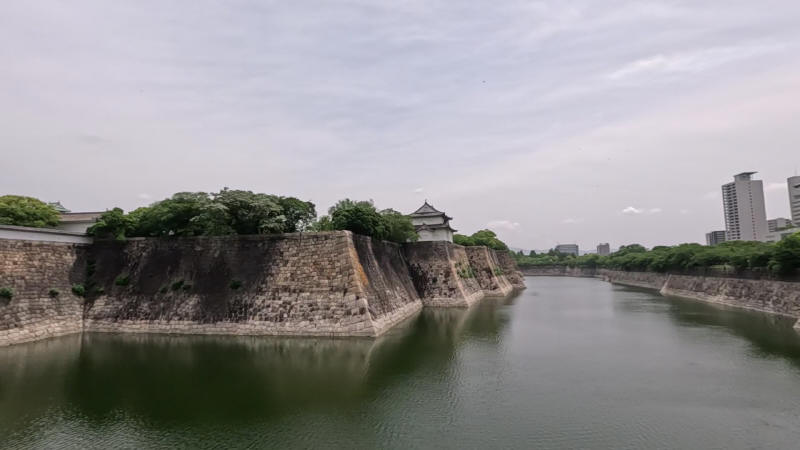
South Outer Moat 大阪城二の丸の南に位置する堀で、西が大手口、東が玉造口で ある。石垣の総延長は約2キロメートル、堀の最大幅は約75メ ートルあり、寛永5年(1628)、徳川幕府による大坂城再築 第3期工事により、豊臣時代大坂城の堀跡に改めて石垣が築造 された。幕府の命令によって動員された大名は肥前佐賀藩鍋島 家・加賀金沢藩前田家・因幡鳥取藩池田家・筑前福岡藩黒田家 など57家。内側の石垣上には東から一番櫓から七番櫓まで七 棟の隅櫓が建造された。櫓は明治維新の大火により四番・五番 ・七番を失い、さらに第二次大戦の空襲により二番・三番を失 って、現在は一番櫓と六番櫓だけが残る。 歴史街道ロゴ
|
| This moat is located to the south of the Ni-no-maru (Outer Bailey) of Osaka
Castle, with the Ote-guchi Entrance situated to its west and the Tamatsukuri-guchi Entrance to its east. The lenght of the stone walls is about 2km in total, and the maximum width of the moat is about 75m. As part of the third-phase of the reconstruction of Osaka Castle launched by the Tokugawa shogunate in 1628, the stone walls were built on the site where a moat of Osaka Castle had been located in the Toyotomi period. The Tokugawa shogunate ordered 57 feudal lords, including the Nabeshima Family of Saga in Hizen province, the Maeda Family of Kanazawa in Kaga, the Ikeda Family of Tottori in Inaba, and the Kuroda Family of Fukuoka in Chikuzen, to particpate in the reconstruction work. Atop the inner stone walls, seven corner turrets were built, out of which the fourth, fifth and seventh turrets were burnt down during the Meiji Restoration, and the second and third turrets were lost in air raids during World War II: as a result, only the first and sixth turrets (Ichiban-yagura and Rokuban-yagura) remain today. |
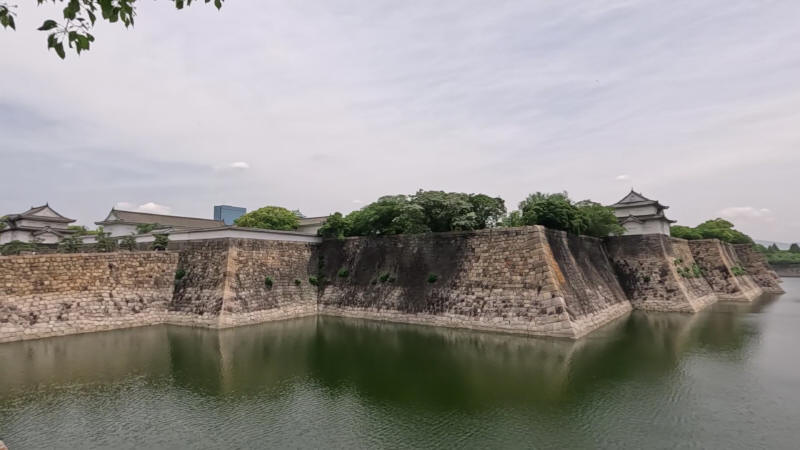
| 南外堀沿いの「生国魂神社お旅所跡」に出っ張りに最接近すると千貫櫓、多聞櫓、六番櫓と眺められる。千貫櫓と多聞櫓が正面に見えだすと大手門も見えてくる。 |
 |
 |
 |
 |
| 六番櫓 | 千貫・多聞・六番 | 千貫・多聞櫓 | |
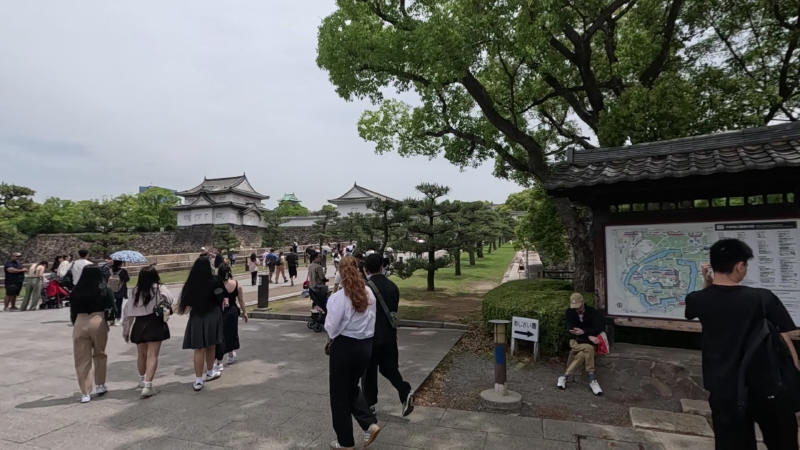
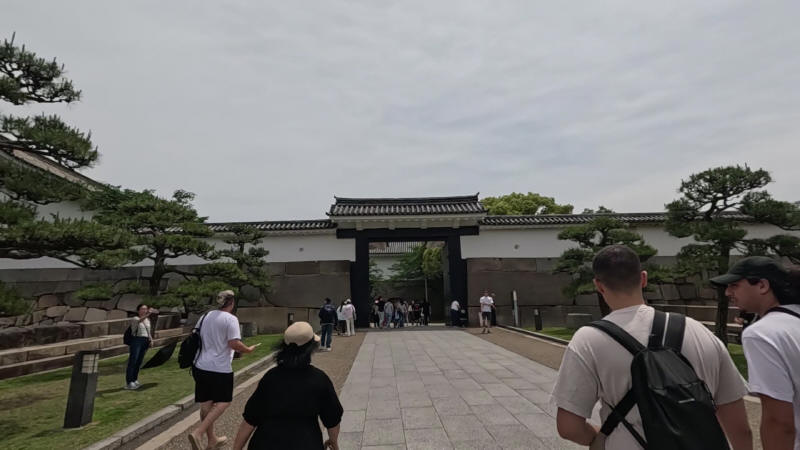
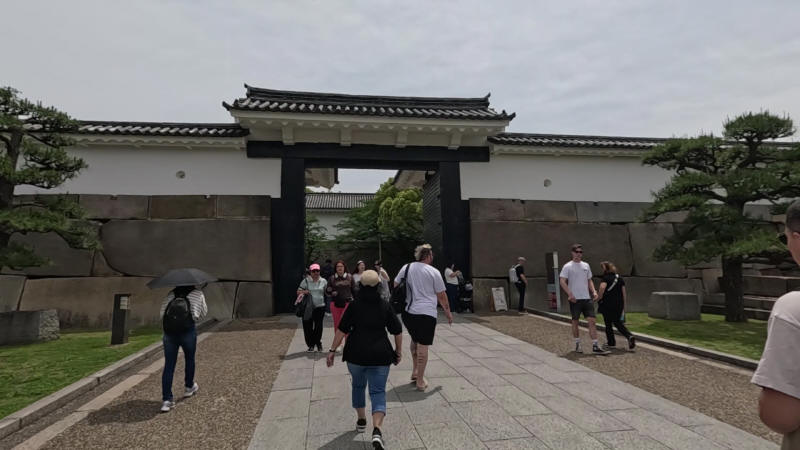
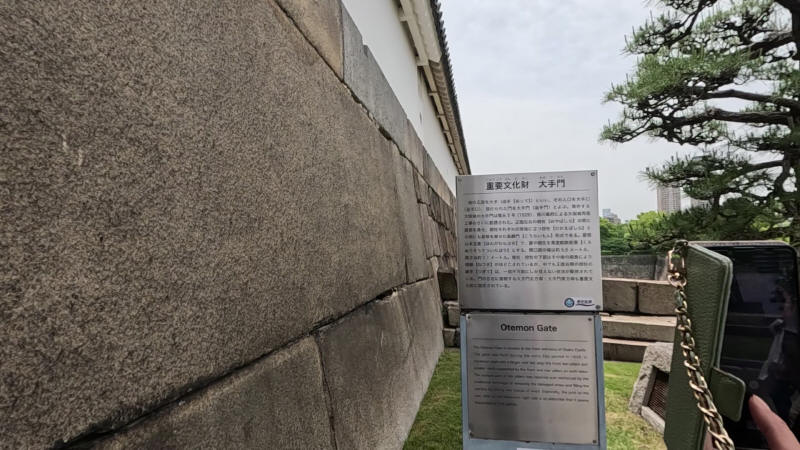
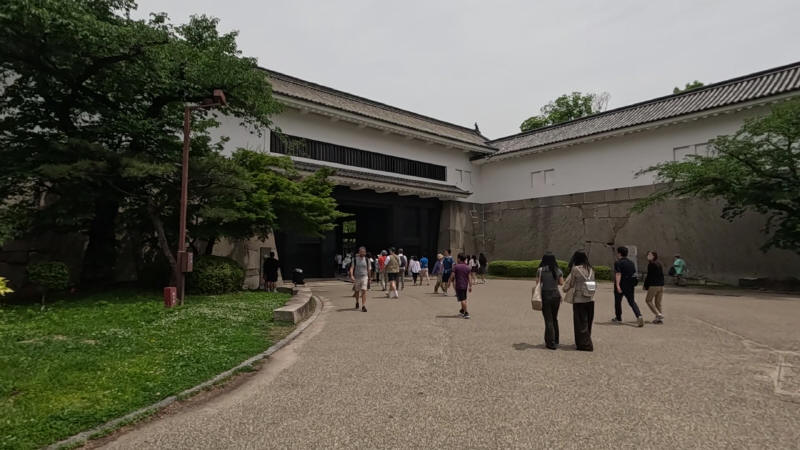
| 大手門の前には解説板が設置されている。大手門を潜ると広場になる。 |
 |
 |
 |
 |
| 大手門 | 大手門の解説 | 広場 | |
|
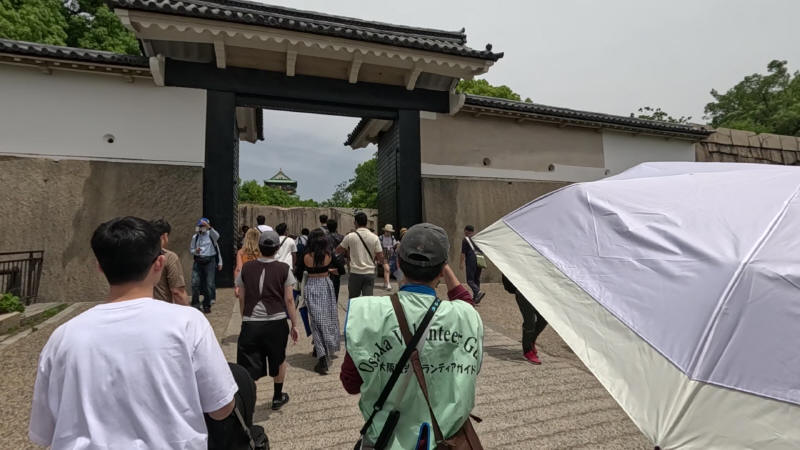
城の正面を大手(追手【おって】)といい、その入口を大手口 (追手口)、設けられた門を大手門(追手門)とよぶ。現存する 大阪城の大手門は寛永5年(1628)、徳川幕府による大坂城再築 工事のさいに創建された。正面左右の親柱【おやばしら】の間に 屋根を乗せ、親柱それぞれの背後に立つ控柱【ひかえばしら】と の間にも屋根を乗せた高麗門【こうらいもん】形式である。屋根 は本瓦葺【ほんがわらぶき】で、扉や親柱を黒塗総鉄板張【くろ ぬりそうてついたばり】とする。開口部の幅は約5.5メートル、 高さは約7.1メートル。親柱・控柱の下部はその後の腐食により 根継【ねつぎ】がほどこされているが、中でも正面右側の控柱の 継手【つぎて】は、一見不可能にしか見えない技法が駆使されて いる。門の左右に接続する大手門北方塀・大手門南方塀も重要文 化財に指定されている。 歴史街道ロゴ
|
|
Otemon Gate
The Otemon Gate is located at the front entrance of Osaka Castle. The gate was built during the early Edo period in 1628, in Koraimon style with a large roof laid atop the front two pillars and smaller roofs supported by the front and rear pillars on both sides. The bottom part of the pillars was repaired and reinforced by the traditional technique of removing the damaged areas and filling the cavities by joining new pieces of wood. Especially, the joint on the rear pillar on the observers' right side is so elaborate that it seems impossible at first glance. |
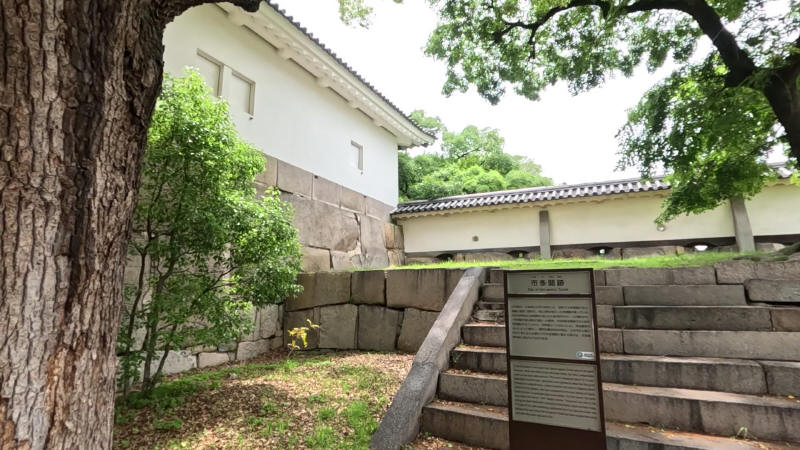
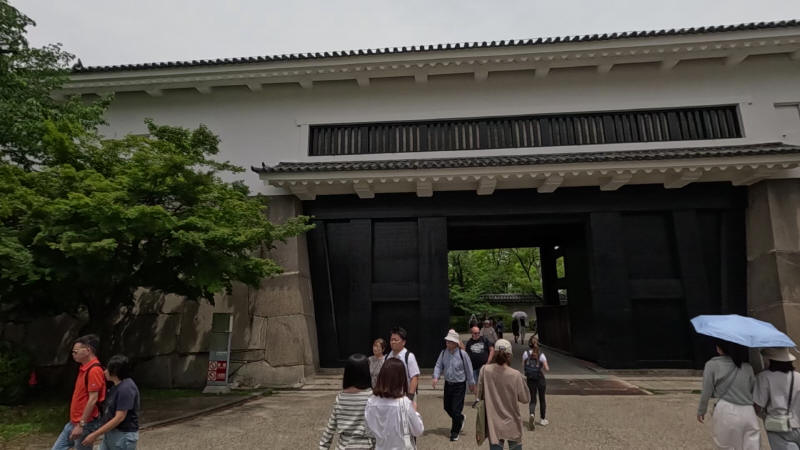
| 目の前に大きな岩の壁「大手口桝形巨石」が立ちはだかる。ここに、ボランティアの案内人がいて、親切に説明してくれた。市多聞跡や多聞櫓の解説板も設置されている。 |
 |
 |
 |
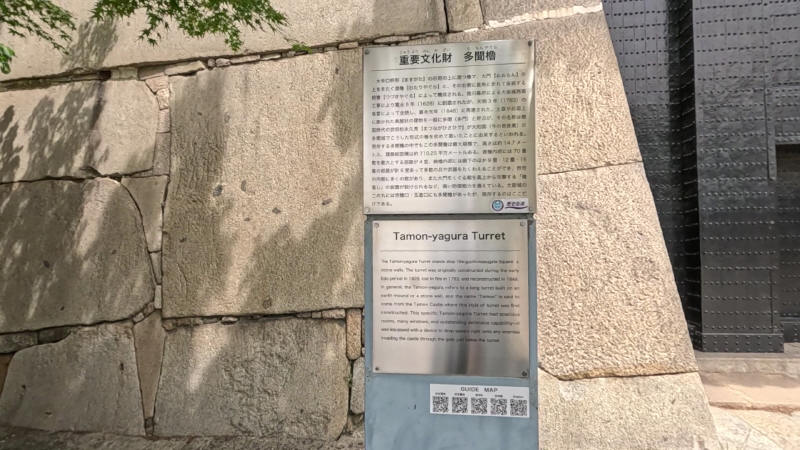 |
| 大手口桝形巨石 | 市多聞跡 | 多聞櫓 | 多聞櫓解説 |
|
枡形とは城の主要な出入口に設けられた四角い区画のことで、 敵の侵入を食い止める役割を果たした。築城技術の進歩にとも なって強固な石垣造りのものがあらわれ、大阪城の大手口枡形で は城の威容を誇示する巨石が数多く使用されている。大手門をく ぐって正面に位置する大手見附石【おおてみつけいし】は、表面 積が約29畳敷(47.98平方メートル)で城内第4位、左の大手 二番石【おおてにばんいし】は約23畳敷(37.90平方メートル) で第5位、右の大手三番石【おおてさんばんいし】は約22畳敷 (35.82平方メートル)で第8位、いずれも採石地は瀬戸内海の 小豆島【しょうどしま】と推定されている。現存する大阪城の遺 構は豊臣時代のものではなく、元和6年(1620)から約10年 にわたった徳川幕府再築工事によるもので、石垣は将軍の命令を 受けた諸大名が分担して築いた。この個所は当初肥後熊本藩主加 藤忠宏【かとうただひろ】が築き、のちに筑後久留米藩主有馬豊 氏【ありまとようじ】が改築した。 歴史街道ロゴ
|
|
Huge stones at
Ote-guchi-masugata Squar Masugata is a square set adjacent to the main gate of a Japanese castle and served to prevent the intrusion of enemies. Ote-guchi-masugata, one of the Masugata Squares in Osaka Castle, incorporated many huge stones. For example, the stone placed at the front behind the Otemon Gate measures 47.98 m2 in surface area, which is the fourth largest in the Osaka Castle. The stone walls of Osaka Castle that remain today were built as part of Osaka Castle reconstruction work initiated by the Tokugawa shogunate in 1620 This part of the stone walls was constructed by Tadahiro Kato, a feudal load of the Kumamoto, and later renovated by Toyouji Arima, a feudal load of the Kurume. |
|
城江戸時代、大坂城の大手口枡形には、現存する多聞櫓のほか、 南側に東西13間5尺、南北3間の独立した多聞櫓が建っていた。 大手口枡形内には定期的に商人の入場が許可され、この櫓の中で、 一年交替で城に詰めた旗本(大番衆)が日用品を調達するための 市が開かれたことから、市多聞という名がついた。明治維新の 大火によって焼失し、現在は礎石のみが残る。大手門から南に のびて東に折れる塀のうち市多聞跡と重なる部分は、市多聞 焼失後に築かれたものである。 歴史街道ロゴ
|
|
Site of Ichi-tamon Turret
In the Edo period, there stood two Tamon-yagura Turret above Ote-guchi Entrance. While one of the turrets still exists today, the other, independent turret on the south side was lost. This turret maasured about 27m east- west and 6m south-north. Merchants were allowed to enter the Ote-guchi Entrance on a regular basis, where a market was held for hatamoto, direct retainers of the shogun, who were assigned to one-year service at Osaka Castle by turns, to purchase daily commodities. For this reason, the turret was called Ichi-tamon. "Ichi" means market. This turret was lost to fire during the Meiji Restoration and only its foundation stone remains today. The part of the wall extending southward from the Ote-mon Gate and turning to the east where the Ichi-tamon Turret had been located was newly built after the turret was lost to fire. |
|
大手口枡形【ますがた】の石垣の上に建つ櫓で、大門【おおもん】の 上をまたぐ渡櫓【わたりやぐら】と、その右側に直角に折れて接続する 続櫓【つづきやぐら】によって構成される。徳川幕府による大坂城再築 工事により寛永5年(1628)に創建されたが、天明3年(1783)の 落雷によって全焼し、嘉永元年(1848)に再建された。土塁や石垣上 に築かれた長屋状の建物を一般に多聞(多門)と呼ぶが、その名称は戦 国時代の武将松永久秀【まつながひさひで】が大和国(今の奈良県)の 多聞城でこうした形式の櫓を初めて築いたことに由来するといわれる。 現存する多聞櫓の中でもこの多聞櫓は最大規模で、高さは約14.7メー トル、建築総面積は約710.25平方メートルある。渡櫓内部には70畳 敷を最大とする部屋が4室、続櫓内部には廊下のほか9畳・12畳・15 畳の部屋が計6室あって多数の兵や武器をたくわえることができ、枡形 の内側に多くの窓があり、また大門をくぐる敵を真上から攻撃する「槍 落し」の装置が設けられるなど、高い防御能力を備えている。大阪城の 二の丸には京橋口・玉造口にも多聞櫓があったが、現存するのはここだ けである。 歴史街道ロゴ
|
|
Tamon-yagura Turret
Tamon-yagura Turret stands atop Ote-guchi-masugata Square's stone walls. The turret was originally constructed during the early Edo period in 1628, lost in fire in 1783, and reconstructed in 1848. In general, the Tamon-yagura refers to a long turret built on an earth mound or a stone wall, and the name "Tamon" is said to come from the Tamon Castle where this style of turret was first constructed. This specific Tamon-yagura Turret had spacious rooms, many windows, and outstanding defensive capability -- it was equipped with a device to drop spears right onto any enemies invading the castle through the gate just below the turret. |
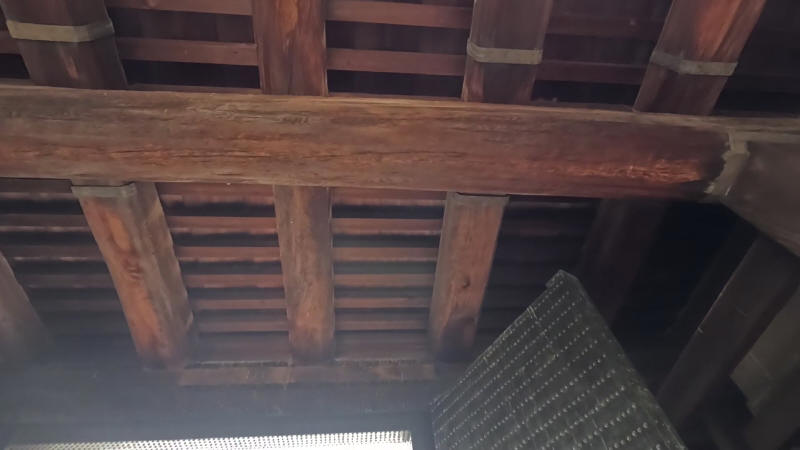
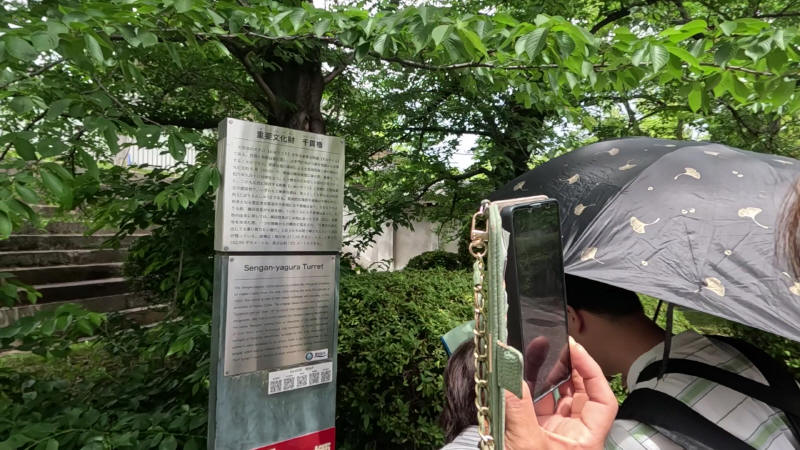
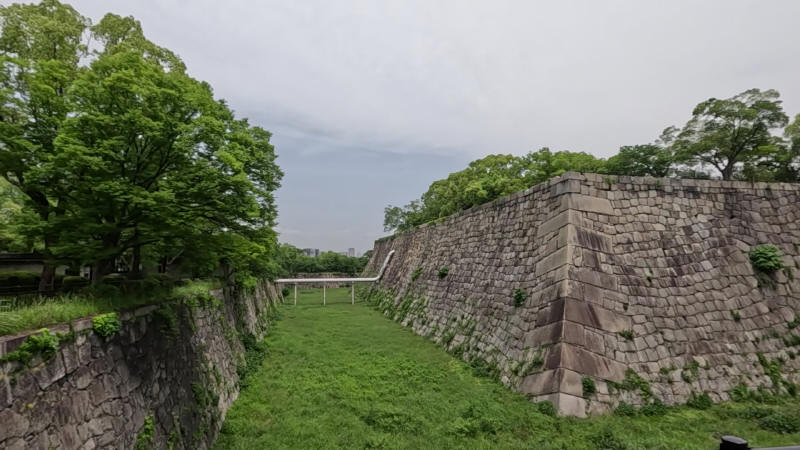
| 多聞櫓の骨組みを見上げて通過する。入ると千貫櫓の解説板がある。空堀は水が無く草が生えていた。曲がり角には南仕切門跡・太鼓櫓跡がある。 |
 |
 |
 |
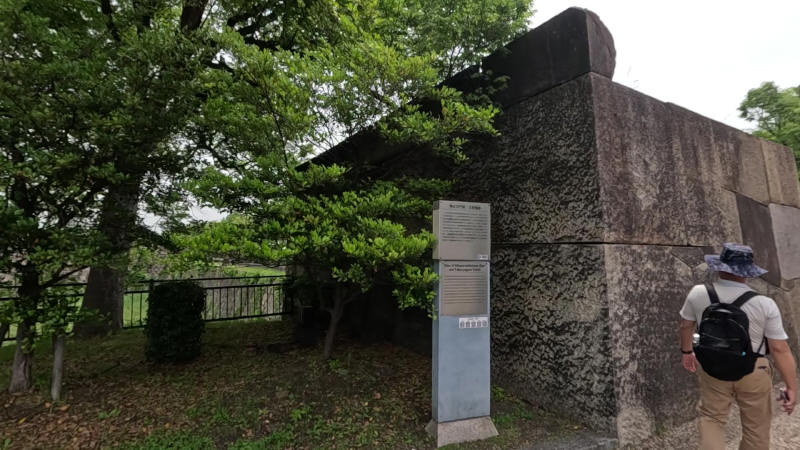 |
| 骨組み | 千貫櫓の解説 | 空堀 | 南仕切門・太鼓櫓跡 |
|
大阪城の大手口【おおてぐち】を守る重要な隅櫓【すみやぐら】 である。西側と南側は堀に面し、大手門に向かう敵を側面から攻撃 することができた。創建は徳川幕府による大坂城再築工事が開始さ れた元和6年(1620)で、戦後の解体修理工事の際、墨書で「元 和六年九月十三日御柱立つ」と上棟式の日を記した部材が見つかっ た。二の丸北西に現存する乾櫓【いぬいやぐら】と同様に大阪城最 古の建造物で、いずれも工事責任者は、茶人としても有名な小堀遠 州【こぼりえんしゅう】である。具体的な場所や規模は不明ながら、 前身となる豊臣秀吉築造の大坂城にも千貫櫓はあり、さらにそれよ りも前、織田信長が大坂を領していたころにも千貫櫓はあった。名 称の由来に関しては、織田信長がこの地にあった大坂(石山)本願 寺を攻めた際、一つの隅櫓からの横矢に悩まされ、「千貫文の銭を 出しても奪い取りたい櫓だ」と兵士たちの間で噂されたという逸話 が残っている。面積は1階が約217.26平方メートル、2階が約 162.95平方メートル、高さは約13.5メートルである。 歴史街道ロゴ
|
|
Sengan-yagura Turret
The Sengan-yagura Turret served to protect tho Ote-guchi Entrance of Osaka Castle from the side. Built during the early Edo period in 1620, this turret is one of the oldest buildings still standing on the premises of Osaka Castle. The original Osaka Castle, built during the Toyotomi period (late 16th century) that preceded the Tokugawa shogunate, also had a turret named the Sengan-yagura. Reportedly, the name "Sengan" comes from an anecdote of the earlier the Age of Civil Wars; when Nobunaga Oda invaded the Osaka (Ishiyama) Hongan-ji Temple, which was located on this site, Nobunaga's soldiers were exposed to an attack from a turret attached to the temple, which was so intense that they murmured among themselves: "That turret is worth Sengan (a large amount of money)." |
|
本丸を囲む内堀は、東から北、さらに西にかけて水堀になって いるのに対し、南とそれに続く西にかけては水のない空堀と なっている。ここは寛永元年(1624)、徳川幕府による大坂城 再築工事の際に築かれたもので、当初から空堀であった。 これに先立つ豊臣秀吉築造の大坂城でも本丸の南は空堀となって おり、大坂の陣で徳川方が埋めたわけでもない。なぜここだけ 空堀としたのかは不明である。 歴史街道ロゴ
|
|
Karahori (Dry Moat)
Encircling Hommaru (Inner Bailey), the inner moat is filled with water from the east to the north but from the south to the west there is no water. In the original Osaka Castle built by Hideyoshi Toyotomi, the southern part of the inner moat was dry. It has been also dry since the castle was reconstructed in 1624 during the Tokugawa Shogunate. The reason for this remains unknown. |
|
二の丸の西と南の区域は石垣によって仕切られ、通路にあたる この個所に建っていたのが南仕切門である。また門の西側石垣の 上には太鼓櫓とよばれる二層の櫓があり、ともに徳川幕府による 大坂城再築工事の最終段階にあたる寛永5年(1628)に創建さ れたと考えられる。太鼓櫓は城内の櫓のうち最も小規模で、中に 太鼓が納められていた。ここには太鼓坊主とよばれる僧形【そう ぎょう】の役人が交替で詰め、彼らは香【こう】をたいて時刻を 計り、城内勤務の大名や旗本以下の招集や交替、あるいは緊急時 に太鼓を打ち鳴らした。いずれの建物も慶応4年(=明治元年、 1868)、明治維新の大火によって焼失した。 歴史街道ロゴ
|
|
Sites of Minami-shikirimon Gate
and Taiko-yagura Turret The western and southern sections in the Ni-no-maru (Outer Bailey) were divided by two stone walls, and access between the divided sections was provided by a gate called the Minami-shikirimon, literally, a south-dividing gate. On the stone wall west to this gate, stood a turret called the Taiko-yagura, or drum turret. Both of these structures are considered to have been built in 1628, during the early Edo period. The Taiko-yagura Turret housed a drum, which was beaten to summon samurai working in the castle, signal the change of a shift, and alert people of emergencies. Both structures were lost in fire during the Meiji Restoration in 1868. |
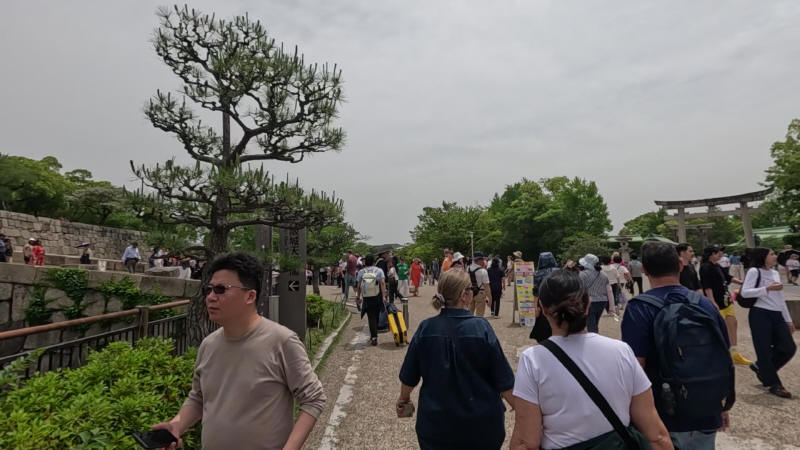
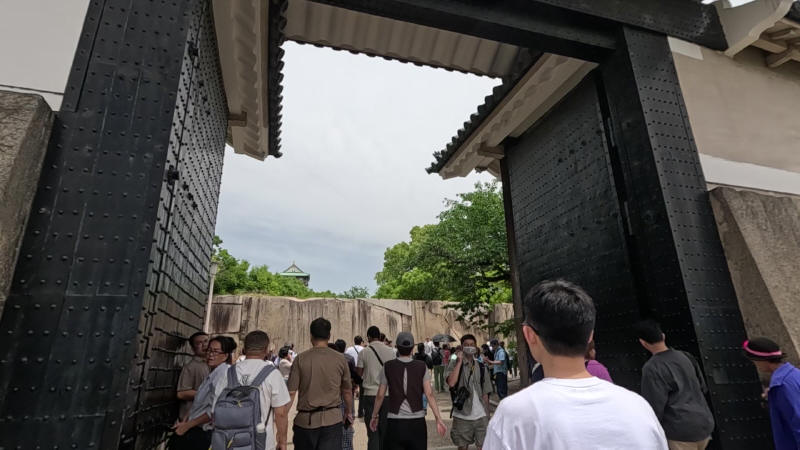
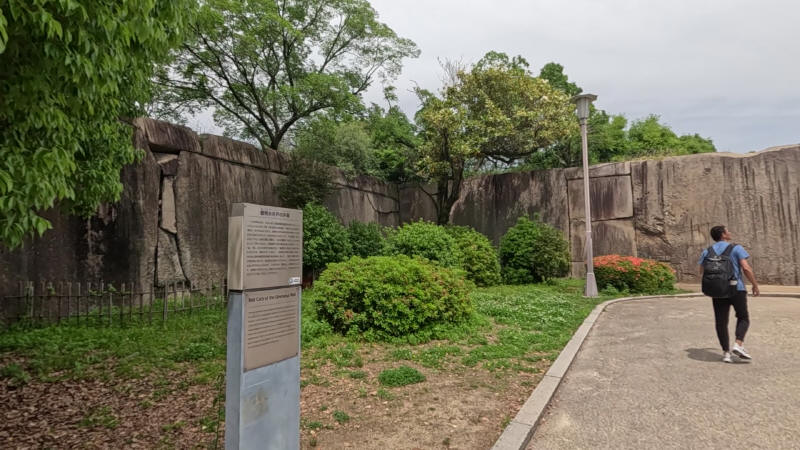
| 内堀沿いの道は広くエレクトリックカーが走っていた。桜田門に向かうと、門を額縁にして天守閣が見えていた。中に入ると桜門枡形の巨石が目の前に広がってくる。 |
 |
 |
 |
 |
| 内堀沿いの道 | 桜門 | 天守閣が | 銀明水井戸の井筒 |
|
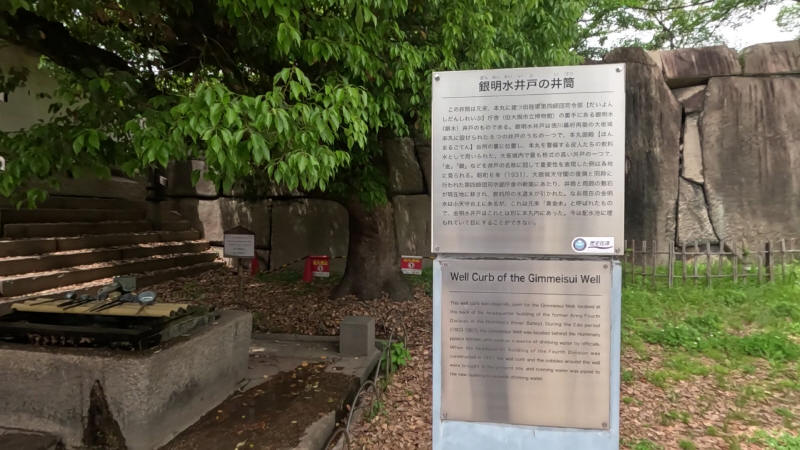
この井筒は元来、本丸に建つ旧陸軍第四司令部庁舎【だいよん しだんしれいぶ】庁舎(旧大阪市立博物館)の裏手にある銀明水 (銀水)井戸のものである。銀明水井戸は徳川幕府再築の大坂城 本丸に設けられた5つの井戸のうちの一つで、本丸御殿【ほん まるごてん】台所の裏に位置し、本丸を警備する役人たちの飲料 水として用いられた。大坂城内で最も格式の高い井戸の一つで、 「金」「銀」などを井戸の名称に冠して重要性を表現した例は各地 に見られる。昭和6年(1931)、大坂城天守閣の復興と同時に 行われた第四師団司令部庁舎の新築にあたり、井筒と周囲の敷石 が現在地に移され、飲料水の水道が引かれた。なお現在の金明 水は小天守台上にもあるが、これは元来「黄金水」とよばれたもの で、金明水井戸はこれとは別に本丸内にあった。今は配水池に埋 もれていて目にすることはできない。 歴史街道ロゴ
|
|
Well Curb of the Gimmeisui Well
This well curb was orignally used for the Gmmmeisui well located at the back of the headquarter building of the former Army Forrth Division in the Hommaru (inner Balley).During the Edo period (1603・1867),the Gmmmeisui well was located behind the Honmaru palace kitchen and used as a source of drinking water by officials When the headquarter building of the Forth Division was constructed in 1931,the well curb and the cobbies around the well were brouht to the presrt site,and the cobbines around the well where brought to the present site and running water was piped to the new buillding to provide drinking water. |
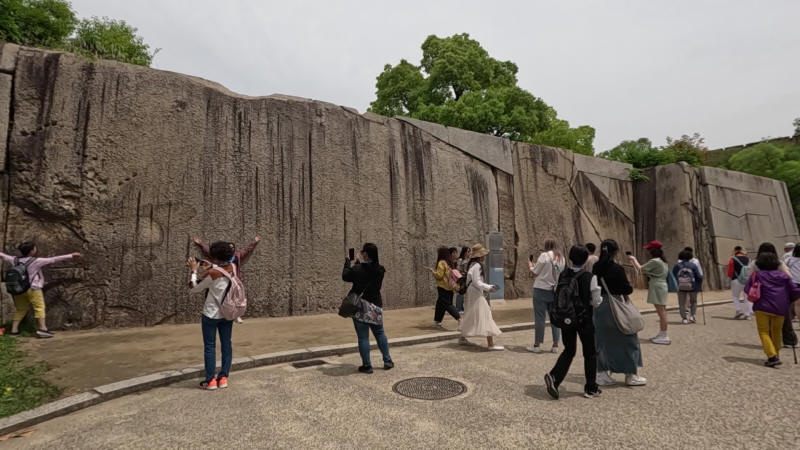
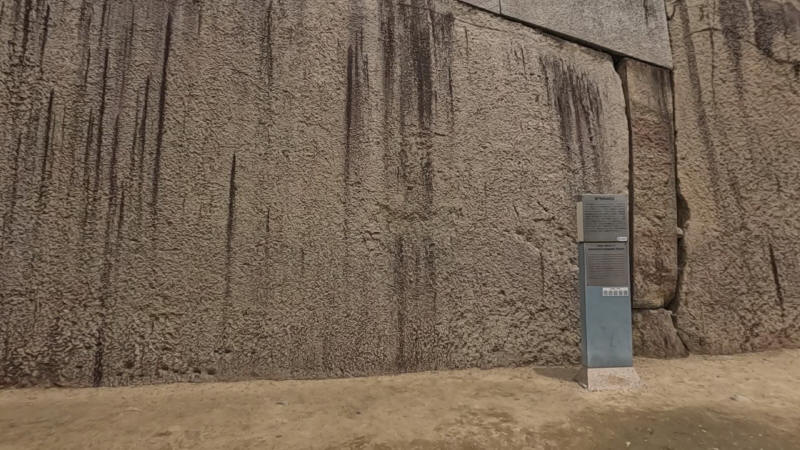
| 巨石に隠れて、門の傍にひっそりと銀明水井戸の井筒がある。桜門枡形の巨石は多くの人が記念写真を写していた。巨石を交わすと真正面に天守閣が見えて来る。 |
 |
 |
 |
 |
| 銀明水井戸の井筒 | 桜門枡形の巨石 | ||
|
桜門枡形の巨石
桜門の内側には、本丸の正面入口を守るため、石垣で四角く囲 まれた「枡形」とよばれる区画が設けられ、上部に多聞櫓【たも んやぐら】が建てられた。この枡形は、徳川幕府による大坂城再 築工事の第2期工事が始まった寛永元年(1624)、備前岡山藩 主池田忠雄【いけだただお】の担当によって築かれ、石材は備前 (岡山県)産の花崗岩【かこうがん】が用いられている。正面の 石は蛸石【たこいし】とよばれる城内第1位の巨石で、表面積 がおよそ36畳敷(59.43平方メートル)、重量は約108トンと 推定される。向かって左手の巨石は振袖石【ふりそでいし】(袖 石【そでいし】)とよばれ、表面積はおよそ33畳敷(53.85平 方メートル)で、城内第3位である。なお、上部の多聞櫓は慶応 4年(=明治元年、1868)、明治維新の大火で焼失した。 歴史街道ロゴ |
|
Huge stones at
Sakuramon-masugata Square To protect the front entrance to the Hommaru (Inner Bailey), a Masugata Square surrounded by a stone wall was created inside the Sakuramon Gate.This stone wall was built during the early Edo period in 1624, by Tadao Ikeda, a feudal lord of Okayama, who was ordered to take charge of this part of the premises by the Tokugawa shogunate. The stone in the front is known as Takoishi, Iiterally, an octopus stone, and is the largest stone in the Osaka Castle, measuring 59.43㎡ in surface area and 108t in estimated weight. The huge stone on the observers' left side is the third largest in the Osaka Castle, known as Furisodeishi, meaning long-sleeved kimono stone. |
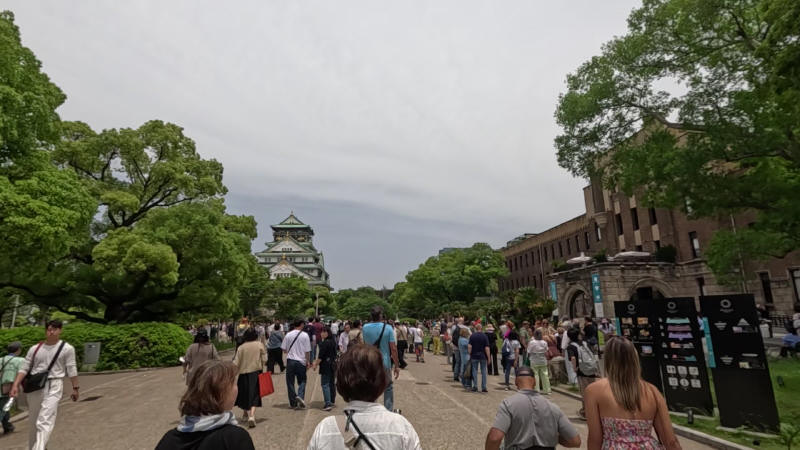
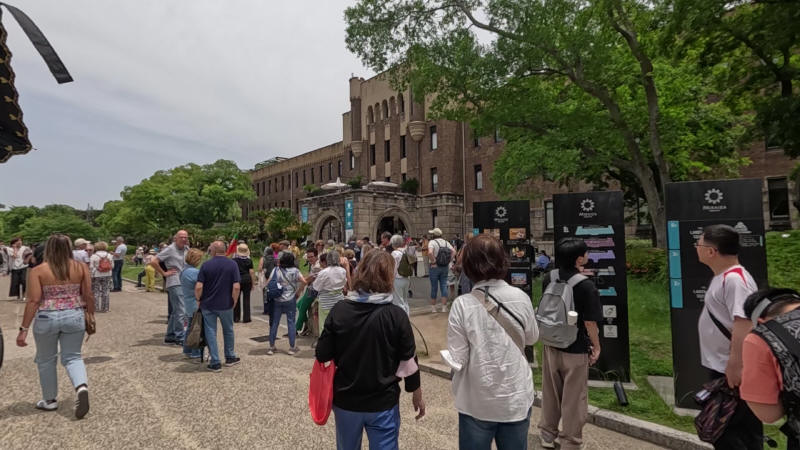
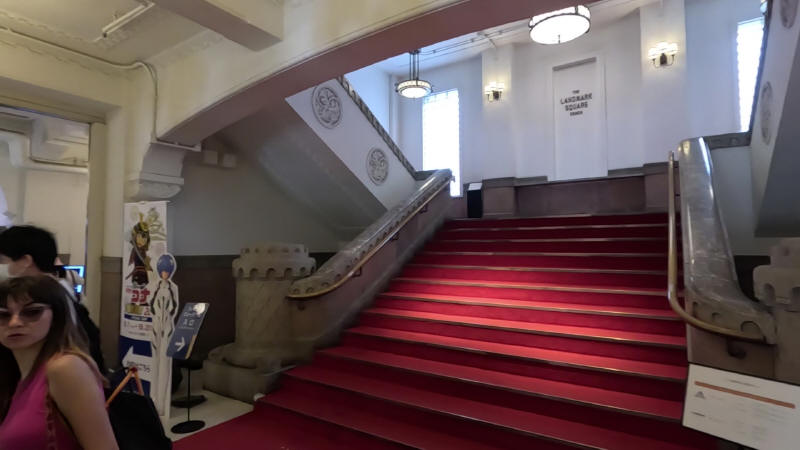
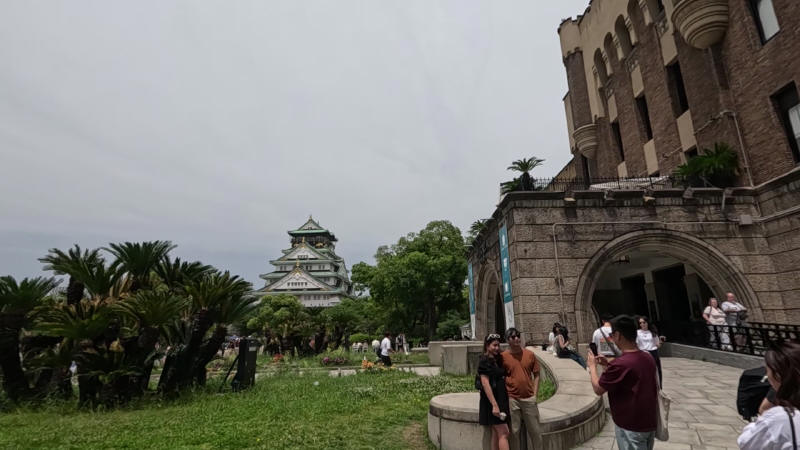
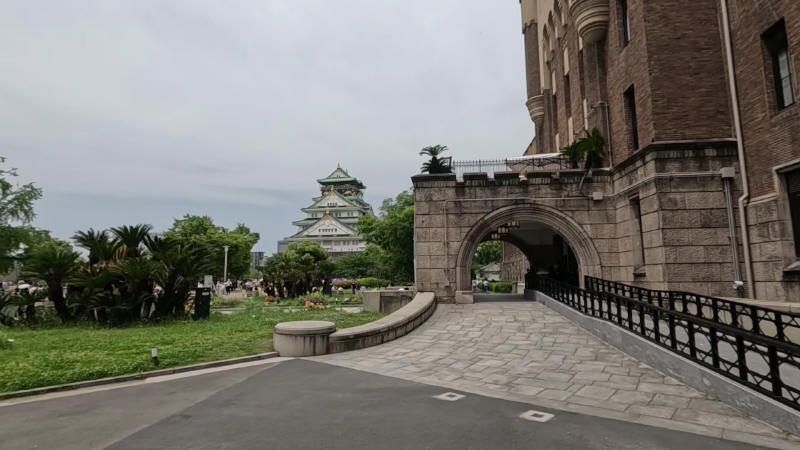
| 「ミライザ大阪城」の中を覗くと階段の手摺が見え、それは北大の農学部とそっくりだった。この建物は1931(昭和6)年に陸軍第四師団司令部庁舎として建てられたようだ。北大は1935(昭和10)年なので同年代の匂いがする。玄関ポーチから天守閣を眺め、いよいよ大坂城へと足を運ぶ。 |
 |
 |
 |
 |
| ミライザ大阪城 | 階段 | 車寄せから大坂城 | 大坂城へ |
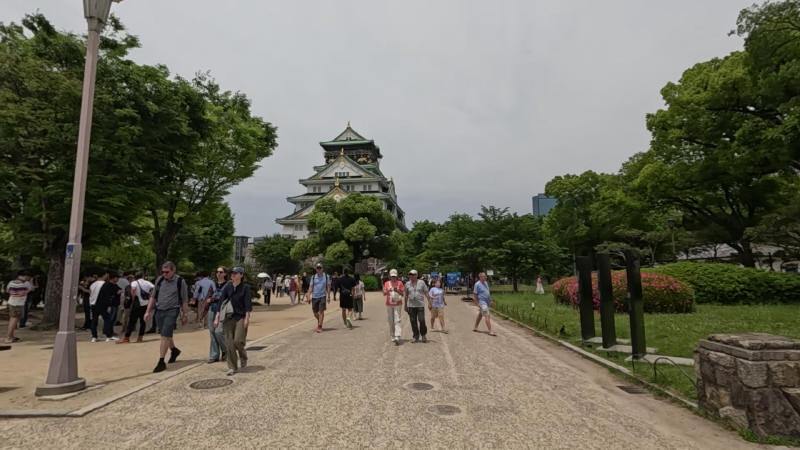
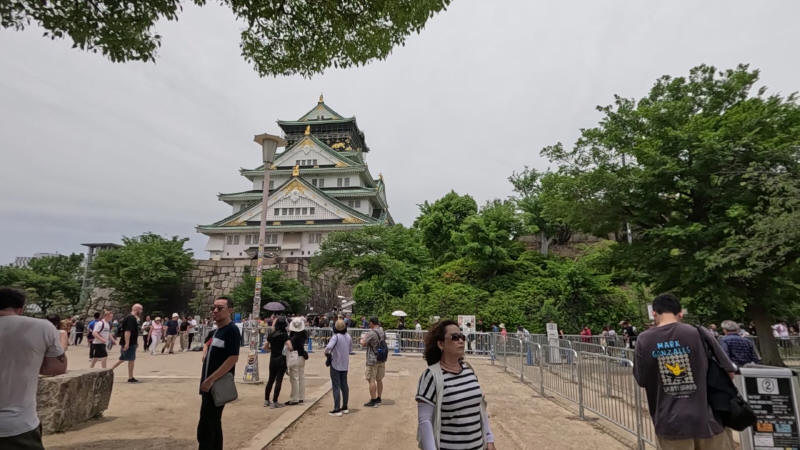
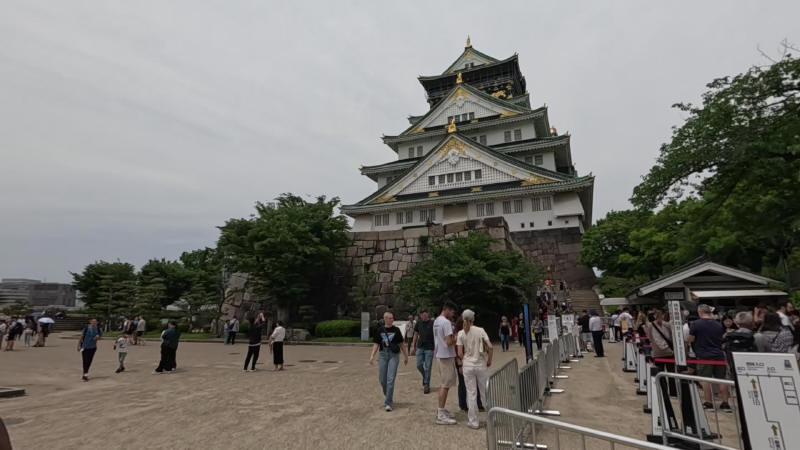
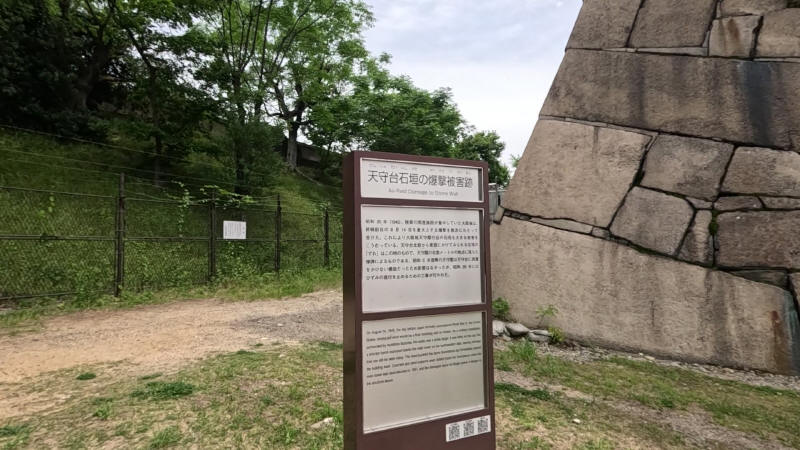
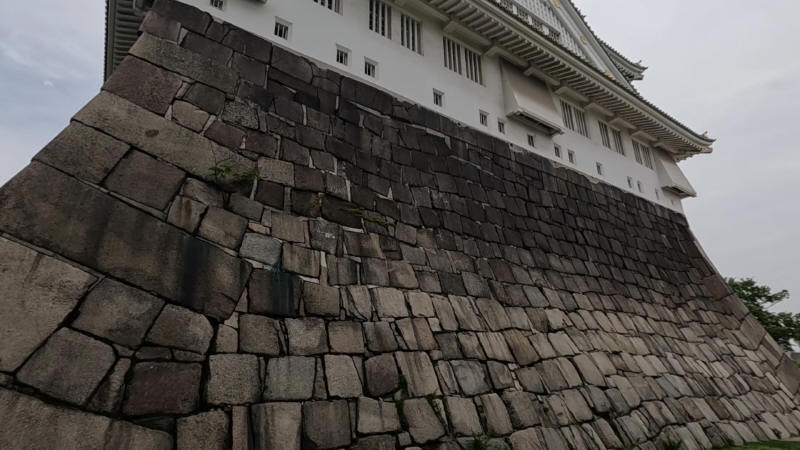
| 一路大坂城へ向かって歩く。天守閣への入館は長蛇の列を作っていた。時間が無かったので、目の前の残念石を眺めて周辺を散策し始める。天守閣の裏手に回ると、米軍の爆撃で被害を受けた石垣があった。気のせいか黒く変色しているように見える。 |
 |
 |
 |
 |
| 大坂城へ | 爆撃被害跡 | 被害跡 | |
|
Air-Raid Damage to Stone Wall 昭和 20 年 (1945)、陸軍の関連施設が集中していた大坂城は、 終戦前日の 8 月 14 日を最大とする爆撃を数次にわたって 受けた。これにより大坂城天守閣付近の石垣も大きな被害を こうむっている。天守台北壁かた東壁にかけてみられる石垣の 「ずれ」はこの時のもので、天守閣の北数メートルの地点に落ちた 爆弾によるものである。昭和 6 年復興の天守閣は天守台に荷重 をかけない構造だったため影響はなかったが、昭和 39 年には ひずみの進行を止めるための工事が行われた。 |
| On August 14,1945,the day before Japan formally surrendered Word War Ⅱ,the
United States conducted what would be a final bombing raid on Osaka.As a military installation surronded by munitions factories,the castle was a prime target.Itwas likely on this day that a one-ton bomb exploded beside the main tower on the northeastem side,leaving damage that can still be seen today.Theblast buckled the stone foundations but fortunately spared the building itself.Concete and steel supports were added inside the foundations when the main tower was reconstructed in 1931,and the damaged stone on longer poses a danger to the structure above. |
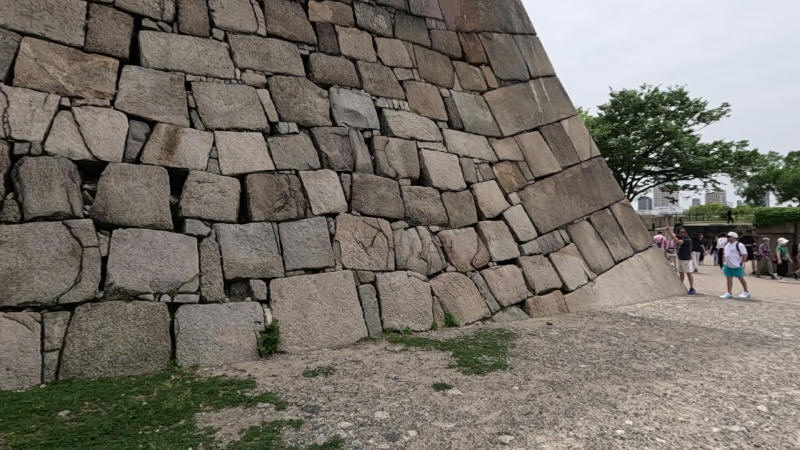
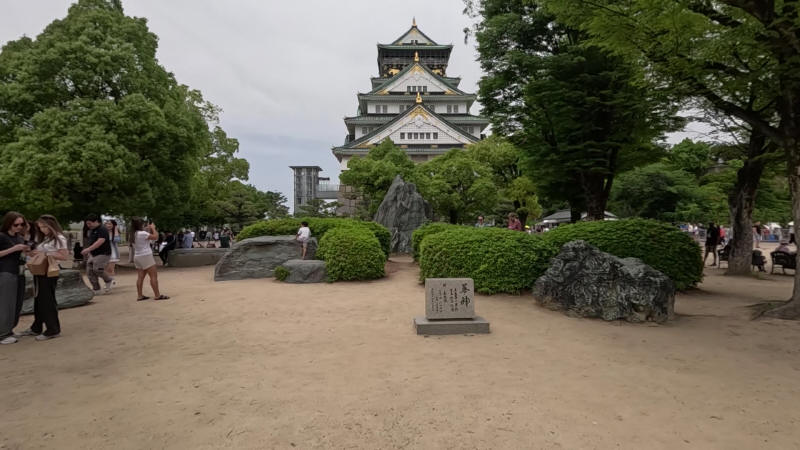
| 石垣を眺めながら正面に戻る。近代的なエレベータが異色を放って突き出て見える。天守閣を真正面から写すと、一つの石碑が気になる。近づくと「華神/未生斎一甫翁/百五十年記念/贈 未生流/ 家九八世 和田公市/大阪 髙●播三/昭和四十八年十月九日」刻まれていた。再び、ミライザ大阪城に寄って引き返す。 |
 |
 |
 |
 |
| 石垣 | エレベータ | 正面 | 再び車寄せから |
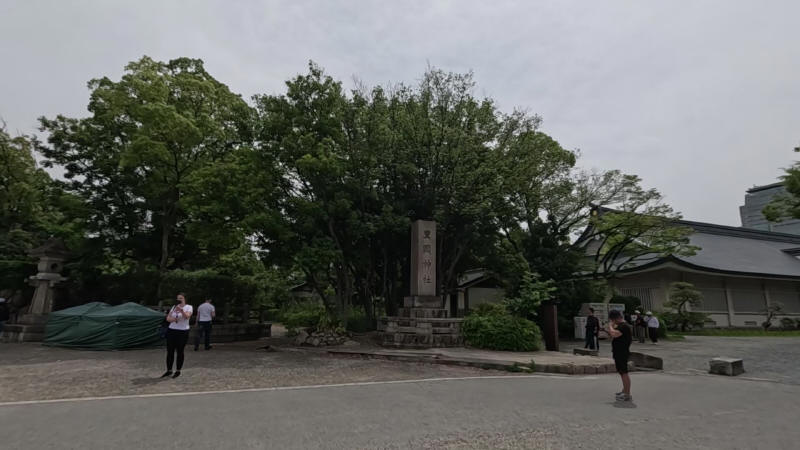
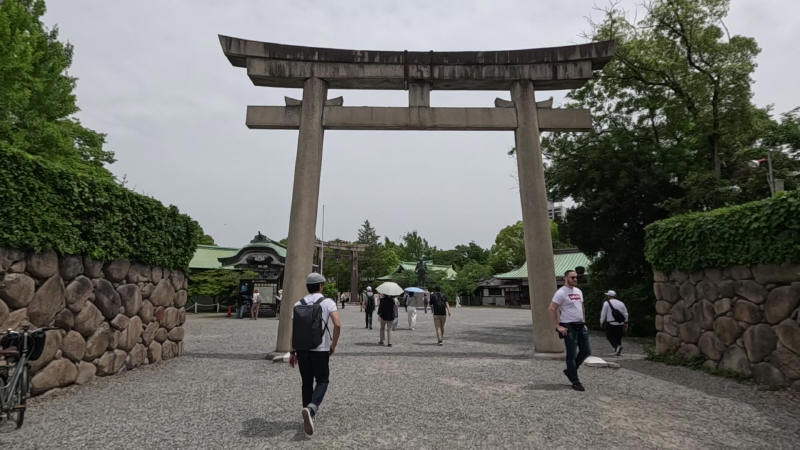
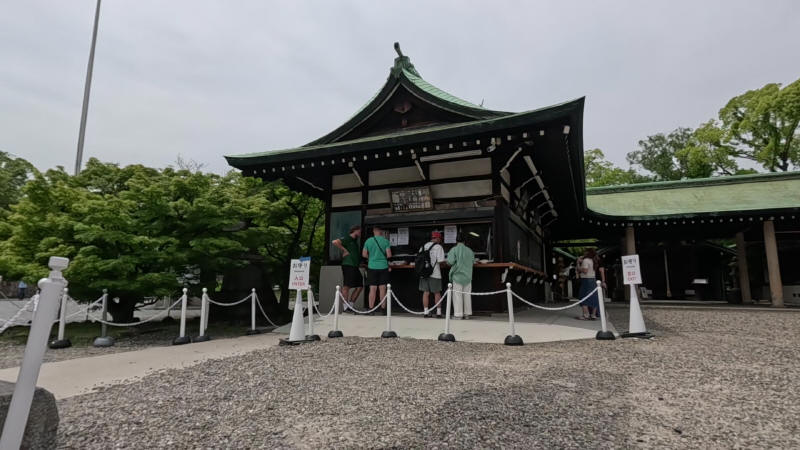
| 豊國神社碑を見て、鳥居を潜ると社務所があり御朱印をいただく。今度は桜田門駅でエレクトリックカーに乗車する。 |
 |
 |
 |
 |
| 豊國神社碑 | 鳥居 | 社務所 | エレクトリックカー |
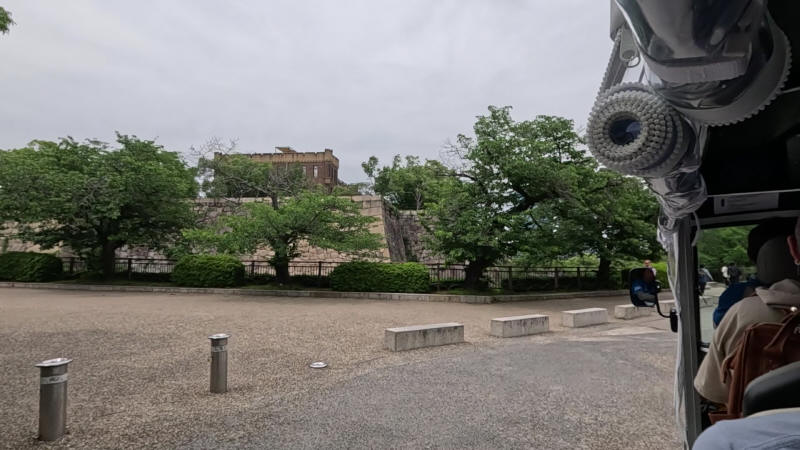
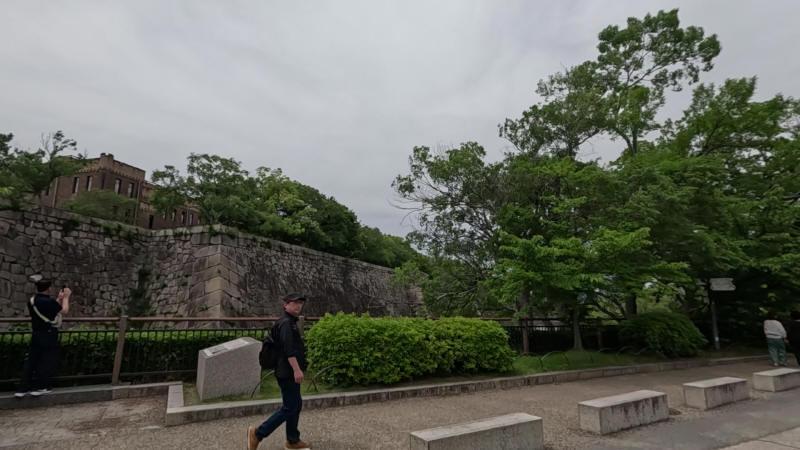
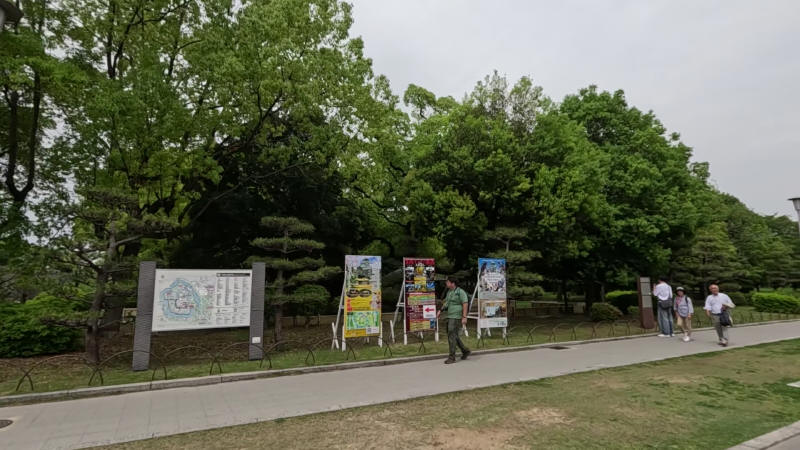
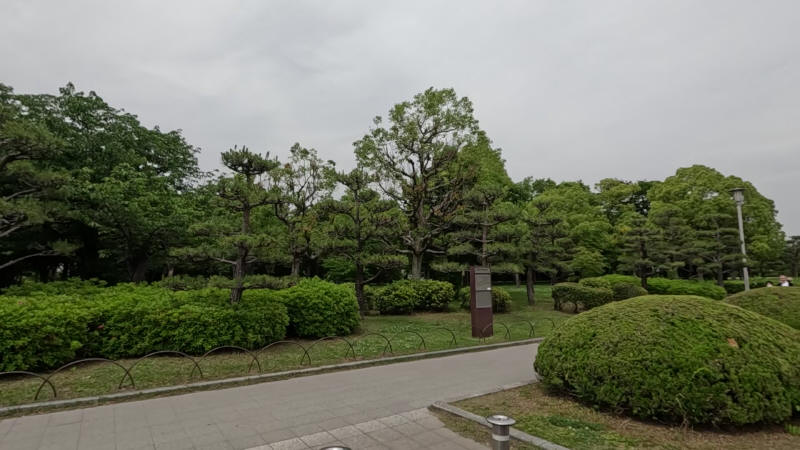
| 南外堀越しにミライザ大阪城を見ながら出発する。南外堀沿いに桜田門前や玉造定番屋跡を通過し、や蓮如上人袈裟懸けの松手前から右に曲がり庭園沿いを走る。 |
 |
 |
 |
 |
| ミライザ大阪城 | 南外堀 | 袈裟懸けの松 | 庭園 |
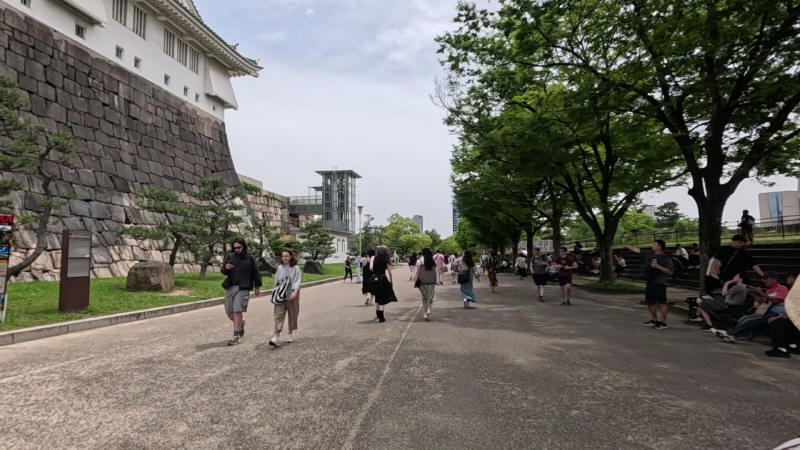
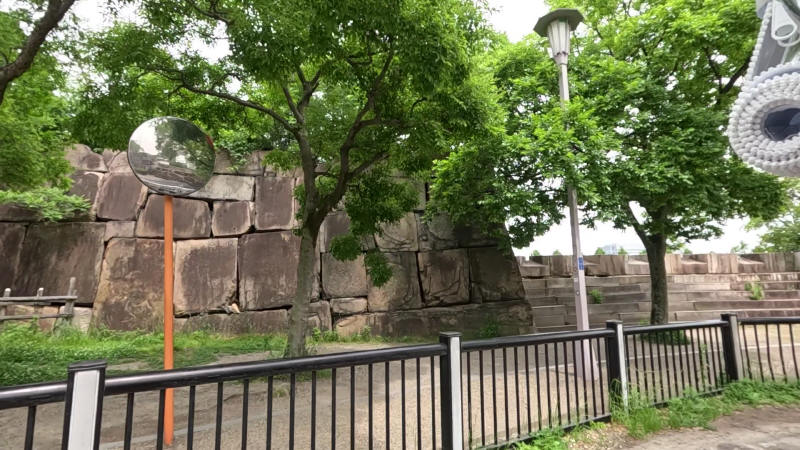
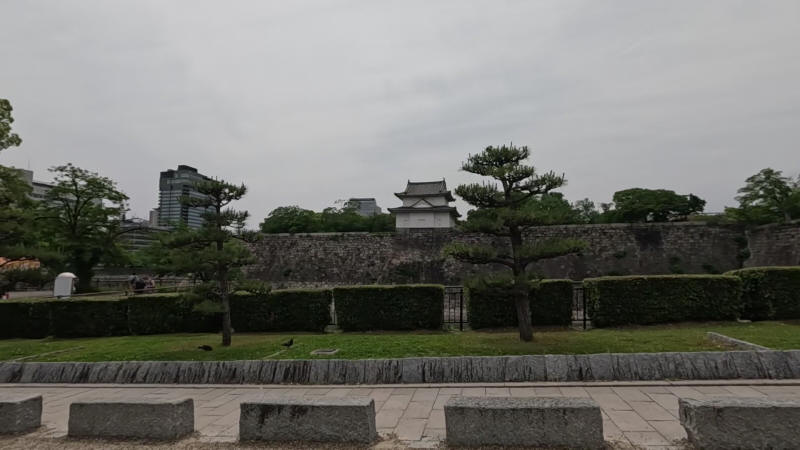
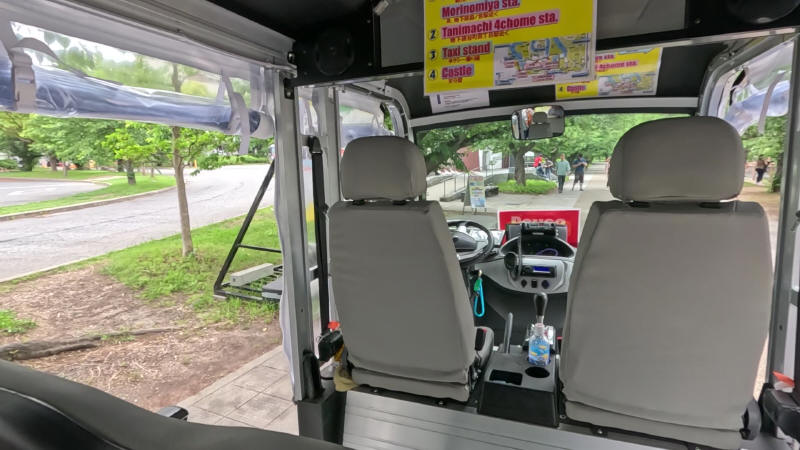
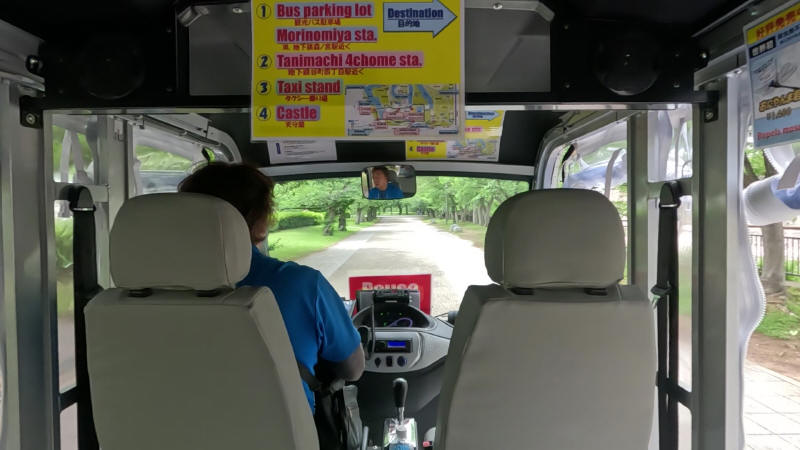
| 90°の曲がり角には石垣があり、玉造口のようだ。ここから南へ向きが変わると、南外堀越しに一番櫓が見えだす。城南バス駅では一時停車する。再び、公園の駐車場やあじさい・ウツギ園沿いの林の中を走る。エレクトリックカーのルートは「大手前→桜門→豊國神社→城南バス→馬場町」と一回りして大人300円だが、馬場町駅で途中下車する。 |
 |
 |
 |
 |
| 曲がり角の玉造口 | 一番櫓 | 車内 | 走行中 |
|
散歩路もくじ8へ 次大阪万博へ 北の探歩訪へ |
|
mym記録 2025(R7)年3月23日(日) 10:40大阪歴史博物館前→10:54大手門→11:13桜門→11:18ミライザ大阪城11:25→昼食→12:28大坂城周辺12:54→→12:58ミライザ大阪城→13:12豊國神社→13:27桜田門エレクトリックカー馬場町13:37 |